- Comms
- Law
- Medic
- News
- Opinion
- Threat Watch
- Training
- Warrior Tools
- Accessories
- Ammo
- Body Armor
- Books
- Clothing
- Commo
- Gear
- Handguns
- Holsters
- Knives
- Long Guns
- ACC
- Accuracy International
- Barrett
- Benelli
- Beretta
- Blaser
- Bushmaster
- Custom
- CZ
- Desert Tactical Arms
- DPMS
- FN
- Forums
- HK
- IWI
- Kel-Tec Long Guns
- LaRue
- LWRC
- McMillan
- Mosin Nagant
- Mossberg
- Para
- Remington
- Rock River Arms
- Ruger Long Guns
- Sabre Defense
- Sako
- SIG Sauer
- SKS
- Smith & Wesson Long Guns
- Springfield
- Styer
- Weatherby
- Wilson Combat
- Winchester
- Magazines
- Maintenance
- Navigation
- Optics
- Sights
- Tech
- Warriors
Archive for category Threat Watch
The End of Counterinsurgency and the Scalable Force
Posted by Brian in Opinion, Threat Watch on 5/Jun/2012 15:07
From STRATFOR:
By George Friedman
The U.S. military for years has debated the utility of counterinsurgency operations. Drawing from a sentiment that harkens back to the Vietnam War, many within the military have long opposed counterinsurgency operations. Others see counterinsurgency as the unavoidable future of U.S. warfare. The debate is between those who believe the purpose of a conventional military force is to defeat another conventional military force and those who believe conventional military conflicts increasingly will be replaced by conflicts more akin to recent counterinsurgency operations. In such conflicts, the purpose of a counterinsurgency is to transform an occupied society in order to undermine the insurgents.
Understanding this debate requires the understanding that counterinsurgency is not a type of warfare; it is one strategy by which a disproportionately powerful conventional force approaches asymmetric warfare. As its name implies, it is a response to an insurgency, a type of asymmetric conflict undertaken by small units with close links to the occupied population to defeat a larger conventional force. Insurgents typically are highly motivated — otherwise they collapse easily — and usually possess superior intelligence to a foreign occupational force. Small units operating with superior intelligence are able to evade more powerful conventional forces and can strike such forces at their own discretion. Insurgents are not expected to defeat the occupying force through direct military force. Rather, the assumption is that the occupying force has less interest in the outcome of the war than the insurgents and that over time, the inability to defeat the insurgency will compel the occupying force to withdraw. Read the rest of this entry »
President Attempts To Bypass Watergate Era Spying Laws
Posted by Brian in Law, News, Threat Watch on 1/Jun/2012 19:11
From Wired’s Threat Level:
The Obama administration is set to argue to a federal appeals court Friday(today) that the government may breach, with impunity, domestic spying laws adopted in the wake of President Richard M. Nixon’s Watergate scandal.
The case tests whether Americans may seek recourse or monetary damages when a sitting U.S. president bypasses Congress’s ban on warrantless spying on Americans — in this instance when President George W. Bush authorized his secret, warrantless domestic spying program in the aftermath of the September 2001 terror attacks.
Venezuela Bans Guns
Posted by Brian in News, Threat Watch on 1/Jun/2012 17:22
Venezuela joins fellow communist regimes such as the USSR, China, North Korea, and the Nazis by banning gun ownership. I now expect crime to increase and would not be surprised by a crackdown on citizens from the government.
From the BBC:
Under the new law, only the army, police and certain groups like security companies will be able to buy arms from the state-owned weapons manufacturer and importer.
Terrorism and the Not-So-Exceptional Individual
Posted by Brian in News, Opinion, Threat Watch on 24/May/2012 16:35
By Scott Stewart
In last week’s Security Weekly, we used a thwarted underwear bomb plot, as well as the U.S. government’s easing the rules of engagement for unmanned aerial vehicle strikes in Yemen, as an opportunity to examine the role of exceptional individuals in militant groups that conduct terrorist attacks. Al Qaeda in the Arabian Peninsula’s (AQAP’s) innovative bombmaker, Ibrahim al-Asiri, is one such individual.
Reported by AP on May 7, the news of the thwarted underwear plot overshadowed another event in Yemen that occurred May 6: a U.S. airstrike in Shabwa province that killed Fahd al-Quso, a Yemeni militant wanted for his involvement in the attack against the USS Cole in October 2000. Al-Quso appeared in a video released by AQAP’s al-Malahim Media in May 2010, during which he threatened attacks against the continental United States, its embassy in Yemen and warships in the waters surrounding Yemen. Read the rest of this entry »
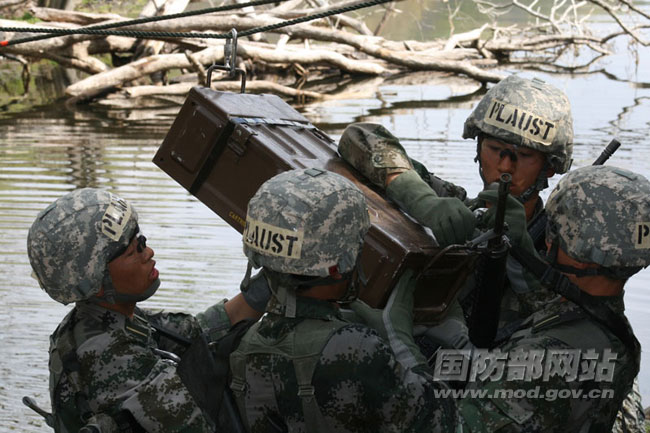
PLA Attends West Point Competition
Posted by Brian in News, Threat Watch, Warriors on 23/May/2012 08:28
A team made up of soldiers from China’s People’s Liberation Army attended the annual Sandhurst Military Skills Competition.
This information comes to us from the China Defense Blog.
Terrorism and the Exceptional Individual
Posted by Brian in Threat Watch on 17/May/2012 18:16
By Scott Stewart
There has been a lot of chatter in intelligence and academic circles about al Qaeda in the Arabian Peninsula (AQAP) bombmaker Ibrahim al-Asiri and his value to AQAP. The disclosure last week of a thwarted AQAP plot to attack U.S. airliners using an improved version of an “underwear bomb” used in the December 2009 attempted attack aboard a commercial airplane and the disclosure of the U.S. government’s easing of the rules of engagement for unmanned aerial vehicle strikes in Yemen played into these discussions. People are debating how al-Asiri’s death would affect the organization. A similar debate undoubtedly will erupt if AQAP leader Nasir al-Wahayshi is captured or killed.
AQAP has claimed that al-Asiri trained others in bombmaking, and the claim makes sense. Furthermore, other AQAP members have received training in constructing improvised explosive devices (IEDs) while training and fighting in places such as Iraq and Afghanistan. This means that al-Asiri is not the only person within the group who can construct an IED. However, he has demonstrated creativity and imagination. His devices consistently have been able to circumvent existing security measures, even if they have not always functioned as intended. We believe this ingenuity and imagination make al-Asiri not merely a bombmaker, but an exceptional bombmaker.
Likewise, al-Wahayshi is one of hundreds — if not thousands — of men currently associated with AQAP. He has several deputies and numerous tactical field commanders in various parts of Yemen. Jihadists have had a presence in Yemen for decades, and after the collapse of al Qaeda in Saudi Arabia, numerous Saudi migrants fleeing the Saudi government augmented this presence. However, al-Wahayshi played a singular role in pulling these disparate jihadist elements together to form a unified and cohesive militant organization that has been involved not only in several transnational terrorist attacks but also in fighting an insurgency that has succeeded in capturing and controlling large areas of territory. He is an exceptional leader.
Individuals like al-Asiri and al-Wahayshi play critical roles in militant groups. History has shown that the loss of exceptional individuals such as these makes a big difference in efforts to defeat such organizations. Read the rest of this entry »
Searching for Connections Amid Terrorist Threats
Posted by Brian in Opinion, Threat Watch on 10/May/2012 15:45
By Scott Stewart
In past Security Weeklies we have often noted how analyzing terrorism is like assembling a puzzle. After an attack has transpired, it is easier to piece the disparate clues together because you have the luxury of knowing what the finished puzzle should look like. You know the target, the method of attack, the time, the place, etc. These factors frame your approach to the bits of evidence you gather and allow you to assemble them into a cohesive, logical framework. While there will certainly be missing pieces at times, having the reference point of the attack itself is helpful to investigators and analysts.
On the other hand, analyzing a potential threat before an attack takes place is far more difficult. It is like sifting through pieces of thousands of different puzzles, all jumbled together in one big pile, and attempting to create a complete picture without knowing what the end result — the attack — will look like. Sometimes pieces look like they could be related, but it is often difficult to determine if they really are without having the picture of the finished attack and the important framework for investigative reference: target, method of attack, time and place. It is often easy to look back after an attack and criticize authorities for not making a critical connection, but it is difficult to piece things together before the attack occurs without the assistance of hindsight. Read the rest of this entry »
4th Amendment Under Attack Yet Again
This stuff is serious. Maybe most of the “People” protected by the Constitution do not have enough imagination to see how terribly wrong this is going to go for all of us, and I mean ALL of us. Well, I can imagine it because I’ve worked for governments, I know what they are capable of, and I promise you it will not be good. To quote Bogey, “maybe not today, maybe not tomorrow, but soon, and for the rest of your life”, if you can call existence in a police state a life. Think this is hyperbole? We’ll see.
I know first hand that getting warrants can be a pain in the ass, but too bad, its our job to defend and protect the constitution, not whine about how hard it is to do our jobs and still abide by the “current” law, or to look for shortcuts and ways to get around the only document that stands between freedom and totalitarianism.
But don’t worry, I’m clearly over reacting because if I wasn’t, those vigilant watchdogs of the Fourth Estate would surely mention the trampling of our fundamental freedoms in their newspapers, websites and TV news shows, wouldn’t they?
Here is the latest assault on our freedoms from the EFF
DOJ Official: Any Privacy Protection is Too Much Privacy Protection for Cell Phone Tracking
Jason Weinstein, a deputy assistant attorney general in the Department of Justice’s criminal division, told a panel at the Congressional Internet Caucus Advisory Committee’s “State of the Mobile Net” conference yesterday that requiring a search warrant to obtain location tracking information from cell phones  would “cripple” prosecutors and law enforcement officials. We couldn’t disagree more.
For years, we’ve been arguing that cell phone location data should only be accessible to law enforcement with a search warrant. After all, as web enabled smart phones become more prevalent, this location data reveals an incredibly revealing portrait of your every move. As we’ve waged this legal battle, the government has naturally disagreed with us, claiming that the Stored Communications Act authorizes the disclosure of cell phone location data with a lesser showing than the probable cause requirement demanded by a search warrant. Read the rest of this entry »
Everyone Has Been Hacked. Now What?
Posted by Gary in Comms, Threat Watch on 6/May/2012 17:03
From; Threat Level
On Apr. 7, 2011, five days before Microsoft patched a critical zero-day vulnerability in Internet Explorer that had been publicly disclosed three months earlier on a security mailing list, unknown attackers launched a spear-phishing attack against workers at the Oak Ridge National Laboratory in Tennessee. More

Oak Ridge National Laboratory
The Continuing Threat of Libyan Missiles
Posted by Brian in News, Threat Watch on 5/May/2012 12:39
From STRATFOR:
By Scott Stewart
In March 2011, while many of the arms depots belonging to the government of Libya were being looted, we wrote about how the weapons taken from Libyan government stockpiles could end up being used to fuel violence in the region and beyond. Since then we have seen Tuareg militants, who were previously employed by the regime of former Libyan leader Moammar Gadhafi, leave Libya with sizable stockpiles of weapons and return to their homes in northern Mali, where they have successfully wrested control of the region away from the Malian government.
These Tuareg militants were aided greatly in their battle against the government by the hundreds of light pickup trucks mounted with crew-served heavy weapons that they looted from Libyan depots. These vehicles, known as “technicals,” permitted the Tuareg rebels to outmaneuver and at times outgun the Malian military. Moreover, we have recently received reports that Tuareg rebels also brought back a sizable quantity of SA-7b shoulder fired surface-to-air missiles, also known as man-portable air defense systems (MANPADS). Read the rest of this entry »
IDF calls up six reserve battalions
Posted by Gary in News, Threat Watch on 2/May/2012 13:14
From: The Times of Israel
The IDF has issued emergency call up orders to six reserve battalions in light of new dangers on the Egyptian and Syrian borders. And the Knesset has given the IDF permission to summon a further 16 reserve battalions if necessary, Israeli media reported on Wednesday.
Tampa City Council wants to Ban CHLs During GOP Convention
Posted by Gary in News, Threat Watch on 29/Apr/2012 12:20
TAMPA, Fla. — The Tampa City Council voted Thursday to ask Gov. Rick Scott to help them ban concealed weapons outside the Republican National Convention.
The council will send a letter to Scott asking him to consult with the Cabinet and legislative leaders on how to address the public safety issue.
Read more here: http://www.miamiherald.com/2012/04/26/2769462/officials-want-guns-banned-from.html
Al Shabaab’s Threat to Kenya
Posted by Brian in News, Threat Watch on 29/Apr/2012 08:31
From STRATFOR:
By Scott Stewart
The U.S. Embassy in Nairobi, Kenya, released a message April 23 informing U.S. citizens in the country that it had received credible information regarding a possible attack against Nairobi hotels or prominent Kenyan government buildings. According to the message, the embassy has reason to believe the attack is in the last stages of the attack planning cycle.
The warning comes as thousands of Kenyan troops occupy much of southern Somalia. Along with a force of Ethiopian troops, local militias and a contingent of African Union Mission in Somalia (AMISOM) troops, the Kenyans are placing heavy pressure on the al Qaeda-linked Somali militant group al Shabaab in southern Somalia. Read the rest of this entry »
Mexico’s Plan to Create a Paramilitary Force
Posted by Brian in Opinion, Threat Watch on 20/Apr/2012 18:31
Report by STRATFOR:
By Scott Stewart
Institutional Revolutionary Party presidential candidate Enrique Pena Nieto, the front-runner in the lead-up to Mexico’s presidential election in July, told Reuters last week that if elected, he would seek to increase the size of the current Mexican federal police force. Pena Nieto also expressed a desire to create a new national gendarmerie, or paramilitary police force, to use in place of the Mexican army and Marine troops currently deployed to combat the heavily armed criminal cartels in Mexico’s most violent hot spots. According to Pena Nieto, the new gendarmerie force would comprise some 40,000 agents.
As Stratfor has previously noted, soldiers are not optimal for law enforcement functions. The use of the military in this manner has produced accusations of human rights abuses and has brought criticism and political pressure on the administration of President Felipe Calderon. However, while the Calderon administration greatly increased the use of the military in the drug war, it was not the first administration in Mexico to deploy the military in this manner. Even former President Vicente Fox, who declared war on the cartels in 2001, was not the first to use the military in this manner. For many decades now, the Mexican government has used the military in counternarcotics operations, and the Mexican military has been used periodically to combat criminals and bandits in Mexico’s wild and expansive north for well over a century.
In recent years, Mexico has had very little choice but to use the military against the cartels due to the violent nature of the cartels themselves and the rampant corruption in many municipal and state police forces. The creation of a new paramilitary police force would provide the Mexican government with a new option, allowing it to remove the military from law enforcement functions. But such a plan would be very expensive and would require the consent of both houses of the Mexican Congress, which could pose political obstacles. But perhaps the most difficult task will be creating a new police force not susceptible to the corruption that historically has plagued Mexican law enforcement agencies. Read the rest of this entry »