- Comms
- Law
- Medic
- News
- Opinion
- Threat Watch
- Training
- Warrior Tools
- Accessories
- Ammo
- Body Armor
- Books
- Clothing
- Commo
- Gear
- Handguns
- Holsters
- Knives
- Long Guns
- ACC
- Accuracy International
- Barrett
- Benelli
- Beretta
- Blaser
- Bushmaster
- Custom
- CZ
- Desert Tactical Arms
- DPMS
- FN
- Forums
- HK
- IWI
- Kel-Tec Long Guns
- LaRue
- LWRC
- McMillan
- Mosin Nagant
- Mossberg
- Para
- Remington
- Rock River Arms
- Ruger Long Guns
- Sabre Defense
- Sako
- SIG Sauer
- SKS
- Smith & Wesson Long Guns
- Springfield
- Styer
- Weatherby
- Wilson Combat
- Winchester
- Magazines
- Maintenance
- Navigation
- Optics
- Sights
- Tech
- Warriors
Posts Tagged Stratfor
The Falcon Lake Murder and Mexico’s Drug Wars
Posted by Brian in News, Threat Watch on 21/Oct/2010 17:19
The Falcon Lake Murder and Mexico’s Drug Wars is republished with permission of STRATFOR.
By Scott Stewart
STRATFOR published an analysis last Wednesday noting that a reliable source in Mexico informed us that the Sept. 30 shooting death of U.S. citizen David Hartley on Falcon Lake — which straddles the U.S.-Mexico border — was a mistake committed by a low-level member of the Los Zetas drug trafficking organization. The source also informed us that those responsible for Hartley’s death are believed to have disposed of his body and that the Zeta hierarchy was conducting a damage-control operation to punish those responsible for the death and to distance the cartel from the murder. The source further reported that the murder of the lead Tamaulipas state investigator on the case, Rolando Armando Flores Villegas — whose head was delivered in a suitcase to the Mexican military’s Eight Zone headquarters in Reynosa on Oct. 12 — was a specific message from Los Zetas to Mexican authorities to back off from the investigation.
Since publishing the report, we have been deluged by interview requests regarding the case. Numerous media outlets have interviewed Fred Burton and myself regarding the Falcon Lake case. During the course of talking with reporters and customers, it became obvious to us that a solid understanding of the context within which Hartley’s killing occurred was lacking in media discussions of the case. Viewing the murder as part of the bigger picture of what is occurring in Mexico makes it far easier to understand not only why David Hartley was killed, but why his body will likely never be found — and why his killers probably will not be held accountable for their actions, at least in the context of the judicial system. Read the rest of this entry »
Texas: Falcon Lake Killing Blamed on Blunder by Cartel lower-level Operatives
Posted by Jack Sinclair in News on 15/Oct/2010 16:03
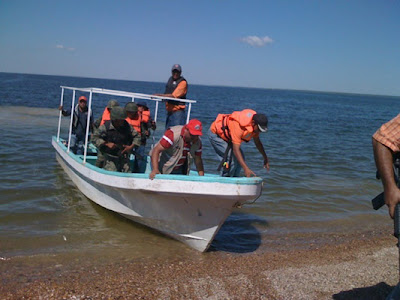
Members of the Mexican military search for David Hartley's body in Falcon Lake.
“BROWNSVILLE — A global intelligence company Wednesday said the death of U.S. citizen David Michael Hartley on Falcon Lake was a case of mistaken identity in a turf war between rival drug cartels.
Hartley, who was shot during a Sept. 30 sightseeing trip to the Mexican side of the binational reservoir, was shot by Zeta cartel enforcers because he was mistaken for a spy of the rival Gulf Cartel, according to the report by STRATFOR, and Austin-based think tank specializing in intelligence and international issues.
The report goes on to say Hartley’s body likely was destroyed as Los Zetas went into “damage control†mode and that the lower-level operatives responsible for the unauthorized strike against him now are on the Zetas’ hit list.”
http://www.borderlandbeat.com/2010/10/falcon-lake-killing-blamed-on-blunder.html
NATO’s Lack of a Strategic Concept
Posted by Brian in News, Opinion, Threat Watch on 12/Oct/2010 16:14
NATO’s Lack of a Strategic Concept is republished with permission of STRATFOR.
By Marko Papic
Twenty-eight heads of state of the North Atlantic Treaty Organization (NATO) will meet in Lisbon on Nov. 20 to approve a new “Strategic Concept,†the alliance’s mission statement for the next decade. This will be NATO’s third Strategic Concept since the Cold War ended. The last two came in 1991 — as the Soviet Union was collapsing — and 1999 — as NATO intervened in Yugoslavia, undertaking its first serious military engagement.
During the Cold War, the presence of 50 Soviet and Warsaw Pact armored divisions and nearly 2 million troops west of the Urals spoke far louder than mission statements. While Strategic Concepts were put out in 1949, 1952, 1957 and 1968, they merely served to reinforce NATO’s mission, namely, to keep the Soviets at bay. Today, the debate surrounding NATO’s Strategic Concept itself highlights the alliance’s existential crisis. Read the rest of this entry »
How to Respond to Terrorism Threats and Warnings
Posted by Brian in Opinion, Threat Watch on 7/Oct/2010 15:38
How to Respond to Terrorism Threats and Warnings is republished with permission of STRATFOR.
By Scott Stewart
In this week’s Geopolitical Weekly, George Friedman wrote that recent warnings by the U.S. government of possible terrorist attacks in Europe illustrate the fact that jihadist terrorism is a threat the world will have to live with for the foreseeable future. Certainly, every effort should be made to disrupt terrorist groups and independent cells, or lone wolves, and to prevent attacks. In practical terms, however, it is impossible to destroy the phenomenon of terrorism. At this very moment, jihadists in various parts of the world are seeking ways to carry out attacks against targets in the United States and Europe and, inevitably, some of these plots will succeed. George also noted that, all too often, governments raise the alert level regarding a potential terrorist attack without giving the public any actionable intelligence, which leaves people without any sense of what to do about the threat.
The world is a dangerous place, and violence and threats of violence have always been a part of the human condition. Hadrian’s Wall was built for a reason, and there is a reason we all have to take our shoes off at the airport today. While there is danger in the world, that does not mean people have to hide under their beds and wait for something tragic to happen. Nor should people count on the government to save them from every potential threat. Even very effective military, counterterrorism, law enforcement and homeland security efforts (and their synthesis — no small challenge itself) cannot succeed in eliminating the threat because the universe of potential actors is simply too large and dispersed. There are, however, common-sense security measures that people should take regardless of the threat level. Read the rest of this entry »
Terrorism, Vigilance and the Limits of the War on Terror
Posted by Brian in News, Threat Watch on 5/Oct/2010 15:51
Terrorism, Vigilance and the Limits of the War on Terror is republished with permission of STRATFOR.
By George Friedman
The U.S. government issued a warning Oct. 3 advising Americans traveling to Europe to be “vigilant.†U.S. intelligence apparently has acquired information indicating that al Qaeda is planning to carry out attacks in European cities similar to those carried out in Mumbai, India, in November 2008. In Mumbai, attackers armed with firearms, grenades and small, timed explosive devices targeted hotels frequented by Western tourists and other buildings in an attack that took three days to put down.
European security forces are far better trained and prepared than their Indian counterparts, and such an attack would be unlikely to last for hours, much less days, in a European country. Still, armed assaults conducted by suicide operatives could be expected to cause many casualties and certainly create a dramatic disruption to economic and social life.
The first question to ask about the Oct. 3 warning, which lacked specific and actionable intelligence, is how someone can be vigilant against such an attack. There are some specific steps that people can and should take to practice good situational awareness as well as some common-sense travel-security precautions. But if you find yourself sleeping in a hotel room as gunmen attack the building, rush to your floor and start entering rooms, a government warning simply to be vigilant would have very little meaning. Read the rest of this entry »
Terror Threats and Alerts in France
Posted by Brian in News, Threat Watch on 2/Oct/2010 09:30
Terror Threats and Alerts in France is republished with permission of STRATFOR.
By Scott Stewart
The Eiffel Tower was evacuated Sept. 28 after an anonymous bomb threat against the symbolic Parisian tourist attraction was phoned in; no explosive device was found. The day before the Eiffel Tower threat, French authorities closed the Gare Saint-Lazare in central Paris after an abandoned package, later determined innocuous, was spotted in the train station.
These two incidents serve as the latest reminders of the current apprehension in France that a terrorist attack is imminent. This concern was expressed in a very public way Sept. 11, when Bernard Squarcini, the head of France’s Central Directorate of Interior Intelligence (known by its French acronym, DCRI), told French newspaper Le Journal du Dimanche that the risk of an attack in France has never been higher. Never is a long time, and France has long faced terrorist threats, making this statement quite remarkable.
Squarcini has noted in recent interviews that the combination of France’s history as a colonial power, its military involvement in Afghanistan and the impending French ban on veils that cover the full face and body (niqabs and burqas) combined to influence this threat environment. Read the rest of this entry »
Pakistan and the U.S. Exit From Afghanistan
Posted by Brian in Opinion, Threat Watch on 30/Sep/2010 13:25
Pakistan and the U.S. Exit From Afghanistan is republished with permission of STRATFOR.
By George Friedman
Bob Woodward has released another book, this one on the debate over Afghanistan strategy in the Obama administration. As all his books do, the book has riveted Washington. It reveals that intense debate occurred over what course to take, that the president sought alternative strategies and that compromises were reached. But while knowing the details of these things is interesting, what would have been shocking is if they hadn’t taken place.
It is interesting to reflect on the institutional inevitability of these disagreements. The military is involved in a war. It is institutionally and emotionally committed to victory in the theater of combat. It will demand all available resources for executing the war under way. For a soldier who has bled in that war, questioning the importance of the war is obscene. A war must be fought relentlessly and with all available means.
But while the military’s top generals and senior civilian leadership are responsible for providing the president with sound, clearheaded advice on all military matters including the highest levels of grand strategy, they are ultimately responsible for the pursuit of military objectives to which the commander-in-chief directs them. Generals must think about how to win the war they are fighting. Presidents must think about whether the war is worth fighting. The president is responsible for America’s global posture. He must consider what an unlimited commitment to a particular conflict might mean in other regions of the world where forces would be unavailable.
A president must take a more dispassionate view than his generals. He must calculate not only whether victory is possible but also the value of the victory relative to the cost. Given the nature of the war in Afghanistan, U.S. President Barack Obama and Gen. David Petraeus — first the U.S. Central Command chief and now the top commander in Afghanistan — had to view it differently. This is unavoidable. This is natural. And only one of the two is ultimately in charge. Read the rest of this entry »
The Tajikistan Attacks and Islamist Militancy in Central Asia
Posted by Brian in Opinion, Threat Watch on 23/Sep/2010 14:02
The Tajikistan Attacks and Islamist Militancy in Central Asia is republished with permission of STRATFOR.
By Ben West
Militants in Tajikistan’s Rasht Valley ambushed a military convoy of 75 Tajik troops Sept. 19, killing 25 military personnel according to official reports and 40 according to the militants, who attacked from higher ground with small arms, automatic weapons and grenades. The Tajik troops were part of a nationwide deployment of security forces seeking to recapture 25 individuals linked to the United Tajik Opposition militant groups that had escaped from prison in Dushanbe on Aug. 24. The daring prison break was conducted by members of the Islamic Movement of Uzbekistan (IMU), and saw five security guards killed and the country put on red alert. According to the Tajik government, after the escape, most of the militants fled to the Rasht Valley, an area under the influence of Islamist militants that is hard to reach for Tajikistan’s security forces and thus rarely patrolled by troops.
Sunday’s attack was one of the deadliest clashes between militants and the Tajik government since the Central Asian country’s civil war ended in 1997. The last comparable attack was in 1998, when militants ambushed a battalion of Interior Ministry troops just outside Dushanbe, killing 20 and kidnapping 110. Sunday’s incident was preceded by a Sept. 3 attack on a police station that involved a suicide operative and a vehicle-borne improvised explosive device (VBIED) in the northwest Tajik city of Khujand that killed four police officers. Suicide attacks are rare in Tajikistan, and VBIEDs even more so. The Khujand attack also stands out as it occurred outside militant territory. Khujand, Tajikistan’s second-largest city after the capital, is located at the mouth of the Fergana Valley, the largest population center in Central Asia.
This represents a noticeable increase in the number and professionalism of militant operations in Tajikistan. Regardless of whether the September attacks can be directly linked to the Aug. 24 jailbreak in Dushanbe, the sudden re-emergence of attacks in Tajikistan after a decade of quiet in Central Asia deserves our attention. In short, something is percolating in the valleys of Central Asia that has reawakened militant groups more or less dormant for a decade. This unrest will likely continue and possibly grow if Tajik security forces can’t get control of the situation. Read the rest of this entry »
A Change of Course in Cuba and Venezuela?
A Change of Course in Cuba and Venezuela? is republished with permission of STRATFOR.
By George Friedman and Reva Bhalla
Strange statements are coming out of Cuba these days. Fidel Castro, in the course of a five-hour interview in late August, reportedly told Jeffrey Goldberg of The Atlantic and Julia Sweig of the Council on Foreign Relations that “the Cuban model doesn’t even work for us anymore.â€
Once that statement hit the headlines, Castro backtracked. Dressed in military uniform for the first time in four years (which we suspect was his way of signaling that he was not abandoning the revolution), he delivered a rare, 35-minute speech Sept. 3 to students at the University of Havana. In addition to spending several minutes on STRATFOR’s Iran analysis, Castro addressed his earlier statement on the Cuban model, saying he was “accurately quoted but misinterpreted†and suggesting that the economic model doesn’t work anymore but that the revolution lives on.
Castro, now 84, may be old, but he still seems to have his wits about him. We don’t know whether he was grossly misinterpreted by the reporter during the earlier interview, was acknowledging the futility of the Cuban model and/or was dropping hints of a policy shift. Regardless of what he did or did not say, Castro’s reported statement on the weakness of the revolution was by no means revolutionary. Read the rest of this entry »
The 9/11 Anniversary and What Didn’t Happen
Posted by Brian in Opinion, Threat Watch on 20/Sep/2010 15:10
The 9/11 Anniversary and What Didn’t Happen is republished with permission of STRATFOR.
By Scott Stewart
Sept. 11, 2010, the ninth anniversary of the 9/11 attacks, was a day of solemn ceremony, remembrance and reflection. It was also a time to consider the U.S. reaction to the attack nine years ago, including the national effort to destroy al Qaeda and other terrorist groups in order to prevent a repeat of the 9/11 attacks. Of course, part of the U.S. reaction to 9/11 was the decision to invade Afghanistan, and the 9/11 anniversary also provided a time to consider how the United States is now trying to end its Afghanistan campaign so that it can concentrate on more pressing matters elsewhere.
The run-up to the anniversary also saw what could have been an attempted terrorist attack in another Western country. On Sept. 10 in Denmark, a potential bombing was averted by the apparent accidental detonation of an improvised explosive device in a bathroom at a Copenhagen hotel. The Danish authorities have not released many details of the incident, but it appears that the suspect may have been intending to target the Danish Jyllands-Posten newspaper, which has been targeted in the past because it published cartoons featuring the Prophet Mohammed in 2005. Groups such as al Qaeda in the Arabian Peninsula (AQAP) have tried hard to ensure that the anger over the cartoon issue does not die down, and it apparently has not. It is important to note that even if the perpetrator had not botched it, the plot — at least as we understand it so far — appears to have involved a simple attack plan and would not have resulted in a spectacular act of terrorism.
Yet in spite of the failed attack in Denmark and all the 9/11 retrospection, perhaps the most interesting thing about the 9/11 anniversary in 2010, at least from an analytical perspective, was what did not happen. For the first time, the al Qaeda core leadership did not issue a flurry of slick, media-savvy statements to mark the anniversary of the 9/11 attacks. And the single statement they did release was not nearly as polished or pointed as past anniversary messages. This has caused us to pause, reflect and wonder if the al Qaeda leadership is losing its place at the ideological forefront of the jihadist cause. Read the rest of this entry »
Elections and Obama’s Foreign Policy Choices
Elections and Obama’s Foreign Policy Choices is republished with permission of STRATFOR.
By George Friedman
We are now nine weeks away from the midterm elections in the United States. Much can happen in nine weeks, but if the current polls are to be believed, U.S. President Barack Obama is about to suffer a substantial political reversal. While we normally do not concern ourselves with domestic political affairs in the United States, when the only global power is undergoing substantial political uncertainty, that inevitably affects its behavior and therefore the dynamics of the international system. Thus, we have to address it, at least from the standpoint of U.S. foreign policy. While these things may not matter much in the long run, they certainly are significant in the short run.
To begin thinking about this, we must bear three things in mind. First, while Obama won a major victory in the Electoral College, he did not come anywhere near a landslide in the popular vote. About 48 percent of the voters selected someone else. In spite of the Democrats’ strength in Congress and the inevitable bump in popularity Obama received after he was elected, his personal political strength was not overwhelming. Over the past year, poll numbers indicating support for his presidency have deteriorated to the low 40 percent range, numbers from which it is difficult, but not impossible, to govern.
Second, he entered the presidency off balance. His early focus in the campaign was to argue that the war in Iraq was the wrong war to fight but that the war in Afghanistan was the right one. This positioned him as a powerful critic of George W. Bush without positioning him as an anti-war candidate. Politically shrewd, he came into office with an improving Iraq situation, a deteriorating Afghanistan situation and a commitment to fighting the latter war. But Obama did not expect the global financial crisis. When it hit full blast in September 2008, he had no campaign strategy to deal with it and was saved by the fact that John McCain was as much at a loss as he was. The Obama presidency has therefore been that of a moderately popular president struggling between campaign promises and strategic realities as well as a massive economic crisis to which he crafted solutions that were a mixture of the New Deal and what the Bush administration had already done. It was a tough time to be president. Read the rest of this entry »
Gauging the Threat of an Electromagnetic Pulse (EMP) Attack
Posted by Brian in Opinion, Threat Watch on 9/Sep/2010 17:40
Gauging the Threat of an Electromagnetic Pulse (EMP) Attack is republished with permission of STRATFOR.
By Scott Stewart and Nate Hughes
Over the past decade there has been an ongoing debate over the threat posed by electromagnetic pulse (EMP) to modern civilization. This debate has been the most heated perhaps in the United States, where the commission appointed by Congress to assess the threat to the United States warned of the dangers posed by EMP in reports released in 2004 and 2008. The commission also called for a national commitment to address the EMP threat by hardening the national infrastructure.
There is little doubt that efforts by the United States to harden infrastructure against EMP — and its ability to manage critical infrastructure manually in the event of an EMP attack — have been eroded in recent decades as the Cold War ended and the threat of nuclear conflict with Russia lessened. This is also true of the U.S. military, which has spent little time contemplating such scenarios in the years since the fall of the Soviet Union. The cost of remedying the situation, especially retrofitting older systems rather than simply regulating that new systems be better hardened, is immense. And as with any issue involving massive amounts of money, the debate over guarding against EMP has become quite politicized in recent years.
We have long avoided writing on this topic for precisely that reason. However, as the debate over the EMP threat has continued, a great deal of discussion about the threat has appeared in the media. Many STRATFOR readers have asked for our take on the threat, and we thought it might be helpful to dispassionately discuss the tactical elements involved in such an attack and the various actors that could conduct one. The following is our assessment of the likelihood of an EMP attack against the United States. Read the rest of this entry »
9/11 and the 9-Year War
Posted by Brian in Opinion, Threat Watch on 8/Sep/2010 15:40
9/11 and the 9-Year War is republished with permission of STRATFOR.
By George Friedman
It has now been nine years since al Qaeda attacked the United States. It has been nine years in which the primary focus of the United States has been on the Islamic world. In addition to a massive investment in homeland security, the United States has engaged in two multi-year, multi-divisional wars in Iraq and Afghanistan, inserted forces in other countries in smaller operations and conducted a global covert campaign against al Qaeda and other radical jihadist groups.
In order to understand the last nine years you must understand the first 24 hours of the war — and recall your own feelings in those 24 hours. First, the attack was a shock, its audaciousness frightening. Second, we did not know what was coming next. The attack had destroyed the right to complacent assumptions. Were there other cells standing by in the United States? Did they have capabilities even more substantial than what they showed on Sept. 11? Could they be detected and stopped? Any American not frightened on Sept. 12 was not in touch with reality. Many who are now claiming that the United States overreacted are forgetting their own sense of panic. We are all calm and collected nine years after.
At the root of all of this was a profound lack of understanding of al Qaeda, particularly its capabilities and intentions. Since we did not know what was possible, our only prudent course was to prepare for the worst. That is what the Bush administration did. Nothing symbolized this more than the fear that al Qaeda had acquired nuclear weapons and that they would use them against the United States. The evidence was minimal, but the consequences would be overwhelming. Bush crafted a strategy based on the worst-case scenario. Read the rest of this entry »
Afghanistan and the War Legend
Afghanistan and the War Legend is republished with permission of STRATFOR.
STRATFOR Readers,
As many of you know, Robert Merry joined STRATFOR as publisher in January. While primarily focused on our business (bless him) he is also a noted reporter (years with The Wall Street Journal as Washington correspondent and head of Congressional Quarterly). Bob knows Washington well, while STRATFOR has always been an outsider there. Since Bob brings a new perspective to STRATFOR, we’d be foolish not to take advantage of it. This analysis marks the first of what will be regular contributions to STRATFOR’s work. His commentary will be titled “Washington Looks at the World†and will focus on the international system through the eyes of official Washington and its unofficial outriders. In this first analysis, Bob focuses on the thinking that went into President Barack Obama’s Aug. 31 speech on the end of U.S. combat operations in Iraq. As with all of STRATFOR’s pieces, it treats political leaders as rational actors and avoids ideology and advocacy. Both are in ample supply in this country, and there is no need to add to it. Bob is not trying to persuade, praise or condemn. Nor is he simply providing facts. He is trying to understand and explain what is happening. I hope you find this of value. I learned something from it. By all means let us know what you think, especially if you like it. Criticisms will also be read but will not be enjoyed nearly as much.
— George Friedman, STRATFOR CEO
By Robert W. Merry
U.S. President Barack Obama’s Aug. 31 Oval Office speech on the end of U.S. combat operations in Iraq had many purposes: to claim a measure of credit for largely fulfilling one of his major campaign promises; to thank those who have served and sacrificed in the cause; to spread the balm of unity over any lingering domestic wounds; to assure Americans that it has all been worth it and that no dishonor was attached to this foreign adventure, which was opposed by many in Obama’s own party and by him from the beginning.
Of all those purposes, and any others that might have been conceived, the need to express assurance of the war’s validity — and honor in its outcome — is by far the most important. Any national leader must protect and nurture the legend of any war over which he presides, even those — actually, particularly those — he has brought to a close. The people need to feel that the sacrifice in blood and treasure was worth it, that the mission’s rationale still makes sense, that the nation’s standing and prestige remain intact.
In terms of America, nothing illustrates this more starkly than the Vietnam experience. This was a war that emerged quite naturally out of a foreign policy outlook, “containment,†that had shaped American behavior in the world for nearly two decades and would continue to shape it for another two decades. Hence, one could argue that the Vietnam War was a noble effort entirely consistent with a policy that eventually proved brilliantly successful. But the national pain of defeat in that war spawned an entirely different legend — that it was a huge mistake and a tragic loss of life for no defensible purpose. The impact of that legend upon the national consciousness could be seen for decades — in war-powers battles between the president and Congress, in a halting defense posture often attributed to what was called the “Vietnam Syndrome,†in the lingering civic hostility engendered when the subject emerged among fellow citizens, in the flow of tears shed daily at Washington’s Vietnam Memorial. Read the rest of this entry »
Rethinking American Options on Iran
Posted by Brian in News, Threat Watch on 2/Sep/2010 15:31
Rethinking American Options on Iran is republished with permission of STRATFOR.
By George Friedman
Public discussion of potential attacks on Iran’s nuclear development sites is surging again. This has happened before. On several occasions, leaks about potential airstrikes have created an atmosphere of impending war. These leaks normally coincided with diplomatic initiatives and were designed to intimidate the Iranians and facilitate a settlement favorable to the United States and Israel. These initiatives have failed in the past. It is therefore reasonable to associate the current avalanche of reports with the imposition of sanctions and view it as an attempt to increase the pressure on Iran and either force a policy shift or take advantage of divisions within the regime.
My first instinct is to dismiss the war talk as simply another round of psychological warfare against Iran, this time originating with Israel. Most of the reports indicate that Israel is on the verge of attacking Iran. From a psychological-warfare standpoint, this sets up the good-cop/bad-cop routine. The Israelis play the mad dog barely restrained by the more sober Americans, who urge the Iranians through intermediaries to make concessions and head off a war. As I said, we have been here before several times, and this hasn’t worked.
The worst sin of intelligence is complacency, the belief that simply because something has happened (or has not happened) several times before it is not going to happen this time. But each episode must be considered carefully in its own light and preconceptions from previous episodes must be banished. Indeed, the previous episodes might well have been intended to lull the Iranians into complacency themselves. Paradoxically, the very existence of another round of war talk could be intended to convince the Iranians that war is distant while covert war preparations take place. An attack may be in the offing, but the public displays neither confirm nor deny that possibility. Read the rest of this entry »