- Comms
- Law
- Medic
- News
- Opinion
- Threat Watch
- Training
- Warrior Tools
- Accessories
- Ammo
- Body Armor
- Books
- Clothing
- Commo
- Gear
- Handguns
- Holsters
- Knives
- Long Guns
- ACC
- Accuracy International
- Barrett
- Benelli
- Beretta
- Blaser
- Bushmaster
- Custom
- CZ
- Desert Tactical Arms
- DPMS
- FN
- Forums
- HK
- IWI
- Kel-Tec Long Guns
- LaRue
- LWRC
- McMillan
- Mosin Nagant
- Mossberg
- Para
- Remington
- Rock River Arms
- Ruger Long Guns
- Sabre Defense
- Sako
- SIG Sauer
- SKS
- Smith & Wesson Long Guns
- Springfield
- Styer
- Weatherby
- Wilson Combat
- Winchester
- Magazines
- Maintenance
- Navigation
- Optics
- Sights
- Tech
- Warriors
Archive for category Threat Watch
U.S. and U.K. Counter Terror Expos
Posted by Brian in News, Threat Watch on 23/Feb/2012 08:39
U.S. – Washington, D.C. May 16-17, 2012
U.K. – Olympia, London April 25-26, 2012
Counterterrorism & Security Education and Research Foundation
Posted by Brian in Threat Watch, Warriors on 22/Feb/2012 13:49
CTSERF is a not-for-profit organization dedicated to understanding all facets of terrorism.
Justice Breyer – Ideology vs Machete
Posted by Gary in Law, News, Opinion, Threat Watch on 17/Feb/2012 11:16
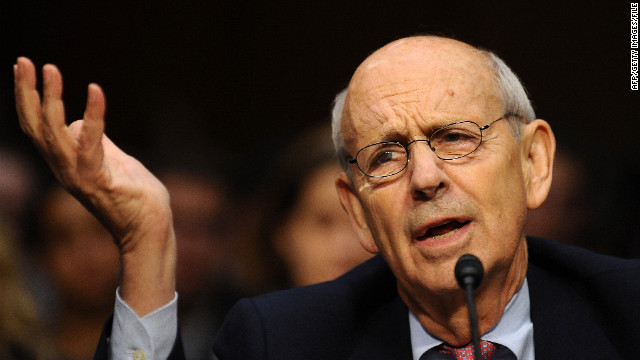
Justice Stephen Breyer
In a bit of timely and ironic justice, Justice Stephen Breyer, who wrote in his dissenting opinion in McDonald vs Chicago, “… the Framers did not write the Second Amendment in order to protect a private right of armed self defense”, was robbed by a machete-wielding miscreant a few days ago on the island of Nevis. Despite the island paradise’s complete ban on handguns (much like the Justice would have preferred to be the case in Chicago) there still seems to be the odd armed robber, threatening peoples lives and inconveniencing vacationers. Normally the Justice doesn’t need to bring along his own firearms for protection like the rest of us, that is the job of the U.S. Marshals Service. I wonder where they were during the attack? You see this is the problem, there is never a taxpayer-funded, well trained, armed bodyguard around when you need one, even if you are a Justice of the Supreme Court of the United States of America.
More from CNN
Jihadist Opportunities in Syria
Posted by Brian in News, Threat Watch on 15/Feb/2012 10:10
From STRATFOR:
By Kamran Bokhari
In an eight-minute video clip titled “Onward, Lions of Syria” disseminated on the Internet Feb. 12, al Qaeda chief Ayman al-Zawahiri expressed al Qaeda’s support for the popular unrest in Syria. In it, al-Zawahiri urged Muslims in Turkey, Iraq, Lebanon and Jordan to aid the Syrian rebels battling Damascus. The statement comes just days after a McClatchy report quoted unnamed American intelligence officials as saying that the Iraqi node of the global jihadist network carried out two attacks against Syrian intelligence facilities in Damascus, while Iraqi Deputy Interior Minister Adnan al-Assadi said in a recent interview with AFP that Iraqi jihadists were moving fighters and weapons into neighboring Syria.
Al Qaeda’s long-term goal has been to oust Arab governments to facilitate the return of a transnational caliphate. Its tactics have involved mainly terrorism intended to cause U.S. intervention in the region. Al Qaeda has hoped such interventions would in turn incite popular uprisings that would bring down the Arab regimes, opening the way for the jihadists to eventually take power. But the jihadist network’s efforts have failed and they have remained a marginal player in the Arab world. By addressing Syria, al Qaeda hopes to tap into the past year of Arab unrest, a movement in which it played little to no part. Read the rest of this entry »
Mexico’s Presidential Election and the Cartel War
Posted by Brian in News, Threat Watch on 14/Feb/2012 16:10
From STRATFOR:
By Scott Stewart
Mexico will hold its presidential election July 1 against the backdrop of a protracted war against criminal cartels in the country. Former President Vicente Fox of the National Action Party (PAN) launched that struggle; his successor, Felipe Calderon, also of the PAN, greatly expanded it. While many Mexicans apparently support action against the cartels, the Calderon government has come under much criticism for its pursuit of the cartels, contributing to Calderon’s low popularity at the moment. The PAN is widely expected to lose in July to the Institutional Revolutionary Party (PRI), which controlled the Mexican presidency for most of the 20th century until Fox’s victory in 2000. According to polls, the PAN has lost credibility among many Mexican voters, many of whom also once again view the PRI as a viable alternative.
In our effort to track Mexico’s criminal cartels and to help our readers understand the dynamics that shape the violence in Mexico, Stratfor talks to a variety of people, including Mexican and U.S. government officials, journalists, business owners, taxi drivers and street vendors. At present, many of these contacts are saying that the Calderon administration could attempt to pull off some sort of last-minute political coup (in U.S. political parlance, an “October surprise”) to boost the PAN’s popularity so it can retain the presidency. Read the rest of this entry »
Afghanistan: Moving Toward a Distant Endgame
Posted by Brian in Opinion, Threat Watch, Warriors on 8/Feb/2012 13:47
From STRATFOR:
By George Friedman
U.S. Defense Secretary Leon Panetta suggested last week that the United States could wrap up combat operations in Afghanistan by the end of 2013, well before the longstanding 2014 deadline when full control is to be ceded to Kabul. Troops would remain in Afghanistan until 2014, as agreed upon at the 2010 Lisbon Summit, and would be engaged in two roles until at least 2014 and perhaps even later. One role would be continuing the training of Afghan security forces. The other would involve special operations troops carrying out capture or kill operations against high-value targets.
Along with this announcement, the White House gave The New York Times some details on negotiations that have been under way with the Taliban. According to the Times, Mullah Mohammad Omar, the senior-most leader of the Afghan Taliban, last summer made overtures to the White House offering negotiations. An intermediary claiming to speak for Mullah Omar delivered the proposal, an unsigned document purportedly from Mullah Omar that could not be established as authentic. The letter demanded the release of some Taliban prisoners before any talks. In spite of the ambiguities, which included a recent public denial by the Taliban that the offer came from Mullah Omar, U.S. officials, obviously acting on other intelligence, regarded the proposal as both authentic and representative of the views of the Taliban leadership and, in all likelihood, those of Mullah Omar, too. Read the rest of this entry »
Administration Continues To Warn About “anti-government exremists”
Posted by Brian in News, Threat Watch on 6/Feb/2012 19:10
From Reuters:
These extremists, sometimes known as “sovereign citizens,” believe they can live outside any type of government authority, FBI agents said at a news conference.
Legal convictions of such extremists, mostly for white-collar crimes such as fraud, have increased from 10 in 2009 to 18 each in 2010 and 2011, FBI agents said.
The Executive branch has an obsession with a tiny percentage of the population in the United States that believes they don’t have to follow any rules. The administration continues to point out these people as a serious threat, while denying any correlation between any terrorist attack and Islam. Where are the FBI warnings of Muslims preaching overthrow of the US government?
STRATFOR: The Arab Spring Revisited
Posted by Brian in Opinion, Threat Watch on 6/Feb/2012 16:28
Video from Stratfor:
Mali Besieged by Fighters Fleeing Libya
Posted by Brian in Opinion, Threat Watch on 2/Feb/2012 20:06
From STRATFOR
By Scott Stewart
Mali has experienced perhaps the most significant external repercussions from the downfall of the regime of Libyan leader Moammar Gadhafi. Stratfor has discussed the impact of the conflict in Libya on the wider region since international intervention began in March 2011. Instability in Libya due to that country’s deep internal fault lines meant that re-establishing a government would prove difficult. As we pointed out, that instability could spread to neighboring countries as weapons and combatants flow outward from Libya.
Reports now indicate that thousands of armed Tuareg tribesmen who previously served in Gadhafi’s military have returned home to Mali. The influx of this large number of well-armed and well-trained fighters, led by a former Libyan army colonel, has re-energized the long-simmering Tuareg insurgency against the Malian government. These Tuareg insurgents have formed a new group, the National Movement for the Liberation of Azawad (MNLA). In mid-January, they began a military campaign to free three northern regions of Mali from Bamako’s control. Read the rest of this entry »
Nigeria’s Boko Haram Militants Remain a Regional Threat
Posted by Brian in News, Threat Watch on 26/Jan/2012 16:18
From STRATFOR:
By Scott Stewart
The Nigerian militant group Boko Haram conducted a series of bombing attacks and armed assaults Jan. 20 in the northern city of Kano, the capital of Kano state and second-largest city in Nigeria. The attacks, which reportedly included the employment of at least two suicide vehicle-borne improvised explosive devices (VBIEDs), targeted a series of police facilities in Kano. These included the regional police headquarters, which directs police operations in Kano, Katsina and Jigawa states, as well as the State Security Service office and the Nigerian Immigration Service office. At least 211 people died in the Kano attacks, according to media reports.
The group carried out a second wave of attacks in Bauchi state on Jan. 22, bombing two unoccupied churches in the Bauchi metropolitan area and attacking a police station in the Tafawa Balewa local government area. Militants reportedly also tried to rob a bank in Tafawa Balewa the same day. Though security forces thwarted the robbery attempt, 10 people reportedly died in the clash, including two soldiers and a deputy police superintendent.
In a third attack, Boko Haram militants attacked a police sub-station in Kano on Jan. 24 with small arms and improvised hand grenades. A tally of causalities in the assault, which reportedly lasted some 25 minutes, was not available. This armed assault stands out tactically from the Jan. 20 suicide attacks against police stations in Kano. The operation could have been an attempt to liberate some of the Boko Haram militants the government arrested following the Jan. 20 and Jan. 22 attacks. Read the rest of this entry »
Considering a U.S.-Iranian Deal
Posted by Brian in News, Threat Watch on 25/Jan/2012 16:04
From STRATFOR:
By George Friedman
Last week, I wrote on the strategic challenge Iran faces in its bid to shape a sphere of influence stretching from western Afghanistan to Beirut on the eastern Mediterranean coast. I also pointed out the limited options available to the United States and other Western powers to counter Iran.
One was increased efforts to block Iranian influence in Syria. The other was to consider a strategy of negotiation with Iran. In the past few days, we have seen hints of both.
Rebel Gains in Syria
The city of Zabadani in southwestern Syria reportedly has fallen into the hands of anti-regime forces. Though the city does not have much tactical value for the rebels, and the regime could well retake it, the event could have real significance. Up to this point, apart from media attention, the resistance to the regime of President Bashar al Assad has not proven particularly effective. It was certainly not able to take and hold territory, which is critical for any insurgency to have significance. Read the rest of this entry »
Polarization and Sustained Violence in Mexico’s Cartel War
Posted by Gary in Threat Watch on 24/Jan/2012 22:23
From: Stratfor
As we noted in last year’s annual cartel report, Mexico in 2010 bore witness to some 15,273 deaths in connection with the drug trade. The death toll for 2010 surpassed that of any previous year, and in doing so became the deadliest year ever in the country’s fight against the cartels. But in the bloody chronology that is Mexico’s cartel war, 2010’s time at the top may have been short-lived. Despite the Mexican government’s efforts to curb cartel-related violence, the death toll for 2011 may have exceeded what had been an unprecedented number.
According to the Mexican government, cartel-related homicides claimed around 12,900 lives from January to September — about 1,400 deaths per month. While this figure is lower than that of 2010, it does not account for the final quarter of 2011. The Mexican government has not yet released official statistics for the entire year, but if the monthly average held until year’s end, the overall death toll for 2011 would reach 17,000. Though most estimates put the total below that, the actual number of homicides in Mexico is likely higher than what is officially reported. At the very least, although we do not have a final, official number — and despite media reports to the contrary — we can conclude that violence in Mexico did not decline substantially in 2011.
Iran, the U.S. and the Strait of Hormuz Crisis
Posted by Brian in News, Threat Watch on 19/Jan/2012 12:31
From STRATFOR:
By George Friedman
The United States reportedly sent a letter to Iran via multiple intermediaries last week warning Tehran that any attempt to close the Strait of Hormuz constituted a red line for Washington. The same week, a chemist associated with Iran’s nuclear program was killed in Tehran. In Ankara, Iranian parliamentary speaker Ali Larijani met with Turkish officials and has been floating hints of flexibility in negotiations over Iran’s nuclear program.
This week, a routine rotation of U.S. aircraft carriers is taking place in the Middle East, with the potential for three carrier strike groups to be on station in the U.S. Fifth Fleet’s area of operations and a fourth carrier strike group based in Japan about a week’s transit from the region. Next week, Gen. Michael Dempsey, chairman of the Joint Chiefs of Staff, will travel to Israel to meet with senior Israeli officials. And Iran is scheduling another set of war games in the Persian Gulf for February that will focus on the Islamic Revolutionary Guard Corps’ irregular tactics for closing the Strait of Hormuz. Read the rest of this entry »
Armed UAV Operations 10 Years On
Posted by Brian in Threat Watch on 16/Jan/2012 16:02
From STRATFOR
One of the most iconic images of the American-led wars in Iraq and Afghanistan — as well as global U.S. counterterrorism efforts — has been the armed unmanned aerial vehicle (UAV), specifically the MQ-1 “Predator” and the MQ-9 “Reaper.” Unarmed RQ-1 Predators (which first flew in 1994) were flying over Afghanistan well before the 9/11 attacks. Less than a month after the attacks, an armed variant already in development was deployed for the first time.
In the decade since, the Predator has clocked more than a million flight hours. And while U.S. Air Force procurement ceased in early 2011 — with more than 250 airframes purchased — the follow-on MQ-9 Reaper has already been procured in numbers and production continues. Predators and Reapers continue to be employed in a broad spectrum of roles, including close air support (CAS), when forward air controllers communicate with UAV operators to release ordnance with friendly troops in the vicinity (CAS is one of the more challenging missions even for manned aircraft because of the heightened risk of friendly casualties). Officially designated “armed, multi-mission, medium-altitude, long endurance, remotely piloted aircraft,” the second to last distinction is the Predator and Reaper’s principal value: the ability to loiter for extended periods, in some cases for more than 24 hours. Read the rest of this entry »
Two Carriers Now in 5th Fleet
Posted by Brian in News, Threat Watch on 11/Jan/2012 13:40
The Carrier Carl Vinson is now in 5th Fleet’s area of operation along with John C. Stennis.
From Military Times:
Vinson, as well as embarked Carrier Air Wing 17, cruiser Bunker Hill and destroyer Halsey, entered 5th Fleet on Jan. 9, where it is expected to support Operation Enduring Freedom in Afghanistan. Navy and Defense Department officials said last week that threats and military exercises from Iran would not deter U.S. forces from continuing to work in the region and that operations were running as usual with no special response to Iran’s provocations.