- Comms
- Law
- Medic
- News
- Opinion
- Threat Watch
- Training
- Warrior Tools
- Accessories
- Ammo
- Body Armor
- Books
- Clothing
- Commo
- Gear
- Handguns
- Holsters
- Knives
- Long Guns
- ACC
- Accuracy International
- Barrett
- Benelli
- Beretta
- Blaser
- Bushmaster
- Custom
- CZ
- Desert Tactical Arms
- DPMS
- FN
- Forums
- HK
- IWI
- Kel-Tec Long Guns
- LaRue
- LWRC
- McMillan
- Mosin Nagant
- Mossberg
- Para
- Remington
- Rock River Arms
- Ruger Long Guns
- Sabre Defense
- Sako
- SIG Sauer
- SKS
- Smith & Wesson Long Guns
- Springfield
- Styer
- Weatherby
- Wilson Combat
- Winchester
- Magazines
- Maintenance
- Navigation
- Optics
- Sights
- Tech
- Warriors
Archive for category Threat Watch
Grenade attacks in Monterrey
Posted by Jack Sinclair in News, Threat Watch on 3/Oct/2010 22:09
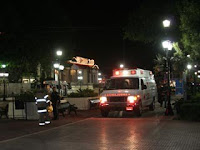
“The weekend has seen four grenade attacks in Nuevo Leon. The attacks began on Friday night in the city of Monterrey.
The first was against the penal institution of Topo Chico, the second exploded 100 meters from the U.S. Consulate office and another near the Judicial building of the city. Although the attacks resulted in vehicle and property damage only one person was reported injured. Mexican Army units secured the area for investigation.
On September 30th governor Rodrigo Medina de la Cruz had claimed that violence was down in the state of Nuevo Leon.”
Terror Threats and Alerts in France
Posted by Brian in News, Threat Watch on 2/Oct/2010 09:30
Terror Threats and Alerts in France is republished with permission of STRATFOR.
By Scott Stewart
The Eiffel Tower was evacuated Sept. 28 after an anonymous bomb threat against the symbolic Parisian tourist attraction was phoned in; no explosive device was found. The day before the Eiffel Tower threat, French authorities closed the Gare Saint-Lazare in central Paris after an abandoned package, later determined innocuous, was spotted in the train station.
These two incidents serve as the latest reminders of the current apprehension in France that a terrorist attack is imminent. This concern was expressed in a very public way Sept. 11, when Bernard Squarcini, the head of France’s Central Directorate of Interior Intelligence (known by its French acronym, DCRI), told French newspaper Le Journal du Dimanche that the risk of an attack in France has never been higher. Never is a long time, and France has long faced terrorist threats, making this statement quite remarkable.
Squarcini has noted in recent interviews that the combination of France’s history as a colonial power, its military involvement in Afghanistan and the impending French ban on veils that cover the full face and body (niqabs and burqas) combined to influence this threat environment. Read the rest of this entry »
Pakistan and the U.S. Exit From Afghanistan
Posted by Brian in Opinion, Threat Watch on 30/Sep/2010 13:25
Pakistan and the U.S. Exit From Afghanistan is republished with permission of STRATFOR.
By George Friedman
Bob Woodward has released another book, this one on the debate over Afghanistan strategy in the Obama administration. As all his books do, the book has riveted Washington. It reveals that intense debate occurred over what course to take, that the president sought alternative strategies and that compromises were reached. But while knowing the details of these things is interesting, what would have been shocking is if they hadn’t taken place.
It is interesting to reflect on the institutional inevitability of these disagreements. The military is involved in a war. It is institutionally and emotionally committed to victory in the theater of combat. It will demand all available resources for executing the war under way. For a soldier who has bled in that war, questioning the importance of the war is obscene. A war must be fought relentlessly and with all available means.
But while the military’s top generals and senior civilian leadership are responsible for providing the president with sound, clearheaded advice on all military matters including the highest levels of grand strategy, they are ultimately responsible for the pursuit of military objectives to which the commander-in-chief directs them. Generals must think about how to win the war they are fighting. Presidents must think about whether the war is worth fighting. The president is responsible for America’s global posture. He must consider what an unlimited commitment to a particular conflict might mean in other regions of the world where forces would be unavailable.
A president must take a more dispassionate view than his generals. He must calculate not only whether victory is possible but also the value of the victory relative to the cost. Given the nature of the war in Afghanistan, U.S. President Barack Obama and Gen. David Petraeus — first the U.S. Central Command chief and now the top commander in Afghanistan — had to view it differently. This is unavoidable. This is natural. And only one of the two is ultimately in charge. Read the rest of this entry »
More killings in Mexico
Posted by Jack Sinclair in News, Threat Watch on 28/Sep/2010 20:16

Tied to Barbed Wire Fence Posts and Executed, Firing Squad Style
Angry Citizens Kill Kidnappers, Force Policemen Out: The Lessons of Ascencion, Chihuahua
Posted by Jack Sinclair in News, Threat Watch on 28/Sep/2010 20:13
“In Ascencion, Chihuahua, a small farming and ranching town of about 10,000 on the road to Casas Grandes, townspeople beat to death two teenage boys participating in a kidnapping of a seventeen year old girl.
Mexico: State Police Arsenal Raided in Chihuahua City
Posted by Jack Sinclair in News, Threat Watch on 28/Sep/2010 20:10
“CHIHUAHUA, Chihuahua – Around 02:00 on the morning of Monday, September 27, at least 6 men dressed in CIPOL state police uniforms with tactical gear & riding in a white Dodge Ram entered the State Security Complex (CIPOL compound) & raided the arsenal.

23 year old U.S citizen, cartel hit man for Los Zetas, arrested in Reynosa, Mexico
Posted by Jack Sinclair in News, Threat Watch on 27/Sep/2010 21:32

23 year old U.S citizen and alleged Los Zetas gang member, Joseph Allen Garcia
“A 23 year old U.S citizen and alleged Los Zetas gang member, Joseph Allen Garcia, was arrested in the border city of Reynosa, Mexico, this Thursday night and expelled within hours to the U.S. to face multiple charges in Texas of murder, attempted murder, aggravated assault, possession of marijuana and a federal charge of unlawful flight to avoid prosecution.
The suspect was arrested by Tamaulipas state investigative police with the help of intelligence shared by Texas authorities. After being expelled by Mexican authorities Garcia was taken into custody Friday morning by U.S. Marshals in Hidalgo County, across the Rio Grande from Reynosa.
According to federal authorities the suspect is a cartel hit man for Los Zetas in Mexico and also works for the Mexican Mafia prison based gang in the Rio Grande Valley of Texas.”
http://www.borderlandbeat.com/2010/09/american-zeta-in-us-custody.html
Mexican Mayors fear for their lives – move to US
Posted by Jack Sinclair in News, Threat Watch on 27/Sep/2010 21:27

“15 mayors have been killed since President Felipe Calderon declared war on Mexico’s drug cartels shortly after taking office in December 2006 including the murder of the mayor of Santiago, Nuevo Leon, Edelmiro Cavazos.
Several Mexican mayors have been forced to move to the United States for reasons of personal and family safety in the face of threats from drug traffickers and the killings of 10 mayors this year in Mexico.
Mayors from the northern border states of Tamaulipas, Chihuahua and Nuevo Leon have moved to the United States, with some taking up residence in that country permanently and others splitting their time between U.S. and Mexican residences, municipal officials said.
The mayors of at least six border cities in the northeastern state of Tamaulipas have been forced to move to neighboring Texas.”
http://www.borderlandbeat.com/2010/09/threats-from-narcos-force-mexican.html
Fourth Mexican mayor in less than six weeks killed by Assassins
Posted by Jack Sinclair in News, Threat Watch on 25/Sep/2010 16:41
MEXICO CITY: Assassins have killed a fourth Mexican mayor in less than six weeks as a drug war continues to engulf formerly calm parts of the country, authorities said.
Gunmen ambushed and shot dead Prisciliano Rodriguez Salinas and an employee on Thursday night at his ranch near the industrial centre of Monterrey, in the northern state of Nuevo Leon. Mr Rodriguez was mayor of the town of Doctor Gonzalez, just north-east of Monterrey.
On Friday Ricardo Solis, who was to be sworn in as mayor of another town, was shot and critically injured in the border state of Chihuahua. President Felipe Calderon condemned the ”cowardly” killings and pledged to continue fighting the drug cartels.
http://www.smh.com.au/world/another-mayor-dies-20100925-15rkt.html
The Tajikistan Attacks and Islamist Militancy in Central Asia
Posted by Brian in Opinion, Threat Watch on 23/Sep/2010 14:02
The Tajikistan Attacks and Islamist Militancy in Central Asia is republished with permission of STRATFOR.
By Ben West
Militants in Tajikistan’s Rasht Valley ambushed a military convoy of 75 Tajik troops Sept. 19, killing 25 military personnel according to official reports and 40 according to the militants, who attacked from higher ground with small arms, automatic weapons and grenades. The Tajik troops were part of a nationwide deployment of security forces seeking to recapture 25 individuals linked to the United Tajik Opposition militant groups that had escaped from prison in Dushanbe on Aug. 24. The daring prison break was conducted by members of the Islamic Movement of Uzbekistan (IMU), and saw five security guards killed and the country put on red alert. According to the Tajik government, after the escape, most of the militants fled to the Rasht Valley, an area under the influence of Islamist militants that is hard to reach for Tajikistan’s security forces and thus rarely patrolled by troops.
Sunday’s attack was one of the deadliest clashes between militants and the Tajik government since the Central Asian country’s civil war ended in 1997. The last comparable attack was in 1998, when militants ambushed a battalion of Interior Ministry troops just outside Dushanbe, killing 20 and kidnapping 110. Sunday’s incident was preceded by a Sept. 3 attack on a police station that involved a suicide operative and a vehicle-borne improvised explosive device (VBIED) in the northwest Tajik city of Khujand that killed four police officers. Suicide attacks are rare in Tajikistan, and VBIEDs even more so. The Khujand attack also stands out as it occurred outside militant territory. Khujand, Tajikistan’s second-largest city after the capital, is located at the mouth of the Fergana Valley, the largest population center in Central Asia.
This represents a noticeable increase in the number and professionalism of militant operations in Tajikistan. Regardless of whether the September attacks can be directly linked to the Aug. 24 jailbreak in Dushanbe, the sudden re-emergence of attacks in Tajikistan after a decade of quiet in Central Asia deserves our attention. In short, something is percolating in the valleys of Central Asia that has reawakened militant groups more or less dormant for a decade. This unrest will likely continue and possibly grow if Tajik security forces can’t get control of the situation. Read the rest of this entry »
Sangin, Afghanistan: Taliban stronghold, “Afghanistan’s Fallujah”
Posted by Jack Sinclair in News, Threat Watch on 21/Sep/2010 01:11

By Thomas Harding, Defence Correspondent
“I’d tell anyone now don’t come here because I’d never want to come here again,” one soldier told me this summer at a Sangin patrol base hemmed in by all sides by insurgents.
“This place is different to anywhere else; really it’s a Taliban stronghold,” he added.
The town is likely to remain a Taliban redoubt because it always has been and there is little desire, or resources, to tackle Sangin’s problems. The centre for the narcotics trade and a hub for warring tribes the complexities of Sangin’s problems are deep.
But the town is also the testing ground for the Taliban where an average of 400 external fighters come each year to “earn their stripes” and the fighting is of an intensity not found anywhere else in Helmand. On average there are 15 small arms fire contacts a day and 15 IEDs found a week.
No wonder then that troops nicknamed Sangin the “bastard child of Helmand” or “Afghanistan’s Fallujah”.
The Warlord of Tamaulipas: Eduardo Costilla Sanchez
Posted by Jack Sinclair in News, Threat Watch on 20/Sep/2010 22:31

Eduardo Costilla Sanchez
“He grew up with Osiel Cárdenas Guillén and since 2003, he has headed the Gulf cartel, the second most powerful cartel in the country. Stealthy, Eduardo Costilla, El Coss, overcame internal divisions and now runs a fierce war in Tamaulipas and Nuevo León against their former allies, Los Zetas, who do not forgive him for his alliance to the Sinaloa cartel.
The PGR and the SSP claim that the capo has a presence in over 15 states and the United States, the DEA, including the Department of the Treasury consider him a threat to the security of the US.
Since late 1996 when Osiel Cardenas Guillen took over as head of the Gulf cartel, Eduardo Costilla Sanchez had a definite place in the structure of this criminal organization. Known as El Coss, he became the man most trusted to Cardenas Guillen and was known as “Mata Amigos” or “Killer of Friends” for his tendency to betray.
http://www.borderlandbeat.com/2010/09/warlord-in-tamaulipas.html
The 9/11 Anniversary and What Didn’t Happen
Posted by Brian in Opinion, Threat Watch on 20/Sep/2010 15:10
The 9/11 Anniversary and What Didn’t Happen is republished with permission of STRATFOR.
By Scott Stewart
Sept. 11, 2010, the ninth anniversary of the 9/11 attacks, was a day of solemn ceremony, remembrance and reflection. It was also a time to consider the U.S. reaction to the attack nine years ago, including the national effort to destroy al Qaeda and other terrorist groups in order to prevent a repeat of the 9/11 attacks. Of course, part of the U.S. reaction to 9/11 was the decision to invade Afghanistan, and the 9/11 anniversary also provided a time to consider how the United States is now trying to end its Afghanistan campaign so that it can concentrate on more pressing matters elsewhere.
The run-up to the anniversary also saw what could have been an attempted terrorist attack in another Western country. On Sept. 10 in Denmark, a potential bombing was averted by the apparent accidental detonation of an improvised explosive device in a bathroom at a Copenhagen hotel. The Danish authorities have not released many details of the incident, but it appears that the suspect may have been intending to target the Danish Jyllands-Posten newspaper, which has been targeted in the past because it published cartoons featuring the Prophet Mohammed in 2005. Groups such as al Qaeda in the Arabian Peninsula (AQAP) have tried hard to ensure that the anger over the cartoon issue does not die down, and it apparently has not. It is important to note that even if the perpetrator had not botched it, the plot — at least as we understand it so far — appears to have involved a simple attack plan and would not have resulted in a spectacular act of terrorism.
Yet in spite of the failed attack in Denmark and all the 9/11 retrospection, perhaps the most interesting thing about the 9/11 anniversary in 2010, at least from an analytical perspective, was what did not happen. For the first time, the al Qaeda core leadership did not issue a flurry of slick, media-savvy statements to mark the anniversary of the 9/11 attacks. And the single statement they did release was not nearly as polished or pointed as past anniversary messages. This has caused us to pause, reflect and wonder if the al Qaeda leadership is losing its place at the ideological forefront of the jihadist cause. Read the rest of this entry »
Biggest Newspaper in Mexico’s most violent city will restrict drug war coverage.
Posted by Jack Sinclair in News, Threat Watch on 20/Sep/2010 14:20

AP – A man mourns in front of the coffin containing the body of Diario de Juarez newspaper photographer Carlos …
Terrorism wins: Journalism muzzled by fear of violence.
CIUDAD JUAREZ, Mexico – The biggest newspaper in Mexico’s most violent city will restrict drug war coverage after the killing of its second journalist in less than two years, just as international press representatives will urge the government to make security for journalists a national priority.
In a front-page editorial Sunday, El Diario de Juarez asked drug cartels warring in this city across from El Paso, Texas, to say what they want from the newspaper, so it can continue its work without further death, injury or intimidation of its staff.
At least 22 Mexican journalists have been killed over the past four years, at least eight of them targeted because of their reports on crime and corruption, says the Committee to Protect Journalists, a U.S.-based media watchdog group that plans to present its report to Mexican President Felipe Calderon on Wednesday. At least seven other journalists have gone missing and more have fled the country, the report says.
Many media outlets, especially in border areas, have stopped covering the drug war. Until Sunday, El Diario was not one of them.
http://news.yahoo.com/s/ap/lt_mexico_journalist_killed;_ylt=ArQATucxvqH6bWOxrLzbGWN0fNdF
A Hoodie and a Camera = Terrorist?
Posted by Brian in News, Threat Watch on 10/Sep/2010 14:08
Wired’s Threat Level reports that the TSA has a new ad campaign that asks people to report suspicious activity around airports. The picture on the ad is some what concerning because it shows a guy taking pictures as suspicious activity. Many people take pictures and a lot of them take pictures of airplanes. I am an aviation buff, and the only way to get a good picture of an airplane is when it is on the ground at an airport. Maybe the TSA should worry less about photographers and more about questioning young men between 18-30, who look nervous.