- Comms
- Law
- Medic
- News
- Opinion
- Threat Watch
- Training
- Warrior Tools
- Accessories
- Ammo
- Body Armor
- Books
- Clothing
- Commo
- Gear
- Handguns
- Holsters
- Knives
- Long Guns
- ACC
- Accuracy International
- Barrett
- Benelli
- Beretta
- Blaser
- Bushmaster
- Custom
- CZ
- Desert Tactical Arms
- DPMS
- FN
- Forums
- HK
- IWI
- Kel-Tec Long Guns
- LaRue
- LWRC
- McMillan
- Mosin Nagant
- Mossberg
- Para
- Remington
- Rock River Arms
- Ruger Long Guns
- Sabre Defense
- Sako
- SIG Sauer
- SKS
- Smith & Wesson Long Guns
- Springfield
- Styer
- Weatherby
- Wilson Combat
- Winchester
- Magazines
- Maintenance
- Navigation
- Optics
- Sights
- Tech
- Warriors
Archive for category Opinion
A Unique Perspective on Gun Salesmen
This guy has some good information on what type of personalities a new shooter will encounter at the gun shop. His main point is don’t be intimidated by your lack on knowledge and after this video you will be able to recognize a “fanboy” from a “gun snob”.
Mexico’s Plan to Create a Paramilitary Force
Posted by Brian in Opinion, Threat Watch on 20/Apr/2012 18:31
Report by STRATFOR:
By Scott Stewart
Institutional Revolutionary Party presidential candidate Enrique Pena Nieto, the front-runner in the lead-up to Mexico’s presidential election in July, told Reuters last week that if elected, he would seek to increase the size of the current Mexican federal police force. Pena Nieto also expressed a desire to create a new national gendarmerie, or paramilitary police force, to use in place of the Mexican army and Marine troops currently deployed to combat the heavily armed criminal cartels in Mexico’s most violent hot spots. According to Pena Nieto, the new gendarmerie force would comprise some 40,000 agents.
As Stratfor has previously noted, soldiers are not optimal for law enforcement functions. The use of the military in this manner has produced accusations of human rights abuses and has brought criticism and political pressure on the administration of President Felipe Calderon. However, while the Calderon administration greatly increased the use of the military in the drug war, it was not the first administration in Mexico to deploy the military in this manner. Even former President Vicente Fox, who declared war on the cartels in 2001, was not the first to use the military in this manner. For many decades now, the Mexican government has used the military in counternarcotics operations, and the Mexican military has been used periodically to combat criminals and bandits in Mexico’s wild and expansive north for well over a century.
In recent years, Mexico has had very little choice but to use the military against the cartels due to the violent nature of the cartels themselves and the rampant corruption in many municipal and state police forces. The creation of a new paramilitary police force would provide the Mexican government with a new option, allowing it to remove the military from law enforcement functions. But such a plan would be very expensive and would require the consent of both houses of the Mexican Congress, which could pose political obstacles. But perhaps the most difficult task will be creating a new police force not susceptible to the corruption that historically has plagued Mexican law enforcement agencies. Read the rest of this entry »
Why Surrender Is Never an Option
Why U.S. Bounties on Terrorists Often Fail
Posted by Brian in Opinion, Threat Watch on 13/Apr/2012 16:16
Republished from STRATFOR:
By Scott Stewart
U.S. Deputy Undersecretary of State Wendy Sherman announced April 3 that the U.S. government’s “Rewards for Justice” (RFJ) program was offering a $10 million reward for information leading to the capture and conviction of Hafiz Mohammad Saeed, the founder of Lashkar-e-Taiba (LeT). In other Rewards for Justice cases involving Pakistan, suspects such as Osama bin Laden, Ayman al-Zawahiri, Abdel Basit and Mir Amal Kansi have hidden in Pakistan and maintained relatively low profiles. In this case, Saeed is a very public figure in Pakistan. He even held a news conference April 4 in Rawalpindi announcing his location and taunting the United States by saying he was willing to share his schedule with U.S. officials.
While the Saeed case is clearly a political matter rather than a pure law enforcement or intelligence issue, the case has focused a great deal of attention on Rewards for Justice, and it seems an opportune time to examine the history and mechanics of the program. Read the rest of this entry »
Gunblast Review of KelTec RFB
Posted by Brian in Kel-Tec Long Guns, Long Guns, Opinion on 11/Apr/2012 08:12
Tactical Realities of the Toulouse Shootings
Posted by Brian in Opinion, Threat Watch on 8/Apr/2012 12:22
From STRATFOR:
By Scott Stewart
Mohammed Merah, the suspect in a string of violent attacks culminating with the March 19 shooting deaths of three children and a rabbi at the Ozar Hatorah School in Toulouse, France, committed suicide by cop March 22 after a prolonged standoff at his Toulouse apartment. Authorities believed Merah also to have shot and killed a paratrooper March 11 in Toulouse and two other paratroopers March 15 in Montauban.
While Merah’s death ended his attacks, it also began the inevitable inquiry process as French officials consider how the attacks could have been prevented. The commissions or committees appointed to investigate such attacks normally take months to complete their inquiries, so the findings of the panel looking into the Merah case will not be released in time to have any impact on the French presidential election set to begin April 22. However, such findings are routinely used for political purposes and as ammunition for bureaucratic infighting. Read the rest of this entry »
Afghanistan and the Long War
Posted by Brian in Opinion, Threat Watch, Warriors on 19/Mar/2012 22:12
From STRATFOR:
By George Friedman
The war in Afghanistan has been under way for more than 10 years. It has not been the only war fought during this time; for seven of those years another, larger war was waged in Iraq, and smaller conflicts were under way in a number of other countries as well. But the Afghanistan War is still the longest large-scale, multi-divisional war fought in American history. An American soldier’s killing of 16 Afghan civilians, including nine children, on March 11 represents only a moment in this long war, but it is an important moment.
In the course of the Iraq and Afghanistan wars, military strategists in the United States developed the concept of the long war. The theory was presented in many ways, but its core argument was this: The defeat of Taliban forces and the Iraqi resistance would take a long time, but success would not end the war because Islamist terrorism and its supporters would be a constantly shifting threat, both in the places and in the ways they would operate. Therefore, since it was essential to defeat terrorism, the United States was now engaging in a long war whose end was distant and course unknown. Read the rest of this entry »
No more SERPA holsters in my classes – Kyle Defoor
Posted by Gary in Holsters, Opinion, Warrior Tools on 13/Mar/2012 08:44
From: Kyle Defoor
No more SERPA holsters in my classes
Instead of an outright ban, I have a solution. There are many military units that have been issued/chosen/been told they are using this absurdly dangerous holster. For you guys here is what I’ve got-
With the holster empty take a long sharp knife, reach down inside the SERPA and cut/saw the plastic piece that rests inside the trigger guard when the weapon is holstered. You may need to use a set of needle nose pliers to help rip that nub off. This will make the push button a non issue and the tension screw can be used for retention.
Whoever chose this piece of shit to be issued to anyone- you’re an inexperienced pistol shooter who has no common sense. Hope you got a decent kickback from Blackhawk.
The Myth of the End of Terrorism
This is a report from STRATFOR:
By Scott Stewart
In this week’s Geopolitical Weekly, George Friedman discussed the geopolitical cycles that change with each generation. Frequently, especially in recent years, those geopolitical cycles have intersected with changes in the way the tactic of terrorism is employed and in the actors employing it.
The Arab terrorism that began in the 1960s resulted from the Cold War and the Soviet decision to fund, train and otherwise encourage groups in the Middle East. The Soviet Union and its Middle Eastern proxies also sponsored Marxist terrorist groups in Europe and Latin America. They even backed the Japanese Red Army terrorist group. Places like South Yemen and Libya became havens where Marxist militants of many different nationalities gathered to learn terrorist tradecraft, often instructed by personnel from the Soviet KGB or the East German Stasi and from other militants.
The Cold War also spawned al Qaeda and the broader global jihadist movement as militants flocking to fight the Soviet troops who had invaded Afghanistan were trained in camps in northern Pakistan by instructors from the CIA’s Office of Technical Services and Pakistan’s Inter-Services Intelligence directorate. Emboldened by the Soviet withdrawal from Afghanistan, and claiming credit for the subsequent Soviet collapse, these militants decided to expand their efforts to other parts of the world. Read the rest of this entry »
American Servicemen Murdered Over Book Burning
Posted by Gary in News, Opinion, Threat Watch on 27/Feb/2012 10:11
From: Danger Room
Protests — some better called riots — have spread into their sixth day. Most shockingly, an Interior Ministry employee killed two U.S. servicemembers working in the ministry’s Kabul headquarters, reportedly by shooting them in the head on Saturday with a silencer-equipped pistol. Pentagon press secretary George Little called the killings “murder.â€
More proof that Islam really is no different than any other religion. Muslims are just like Baptists, Buddhists and Lutherans, who will also slit throats and shoot you in the head if someone from your country burns their holy book.
CSAT Advanced Patrol Tactics Class
From: Officer.com
Two years ago, in the summer of 2006, I attended my first training class taught by MSG Paul Howe, USA Retired. Howe taught proper rifle shooting positions, transition drills, and laid out a baseline of skillsets that every rifleman should be able to perform on demand. Howe expertly taught the fundamentals of basic rifle shooting in addition to briefing the class on weapon maintenance, gear placement and preparing for medical emergencies. I took so much away from the class, that I immediately started looking forward to my next training class with Howe.
In 2006, Paul Howe operated under Triple Canopy’s training division, but now he is on his own and works out of his CSAT (Combat Shooting and Tactics) facility in Nacogdoches, TX. The CSAT facility has on-site lodging for up to 24 students, a classroom, and an extensive range facility.
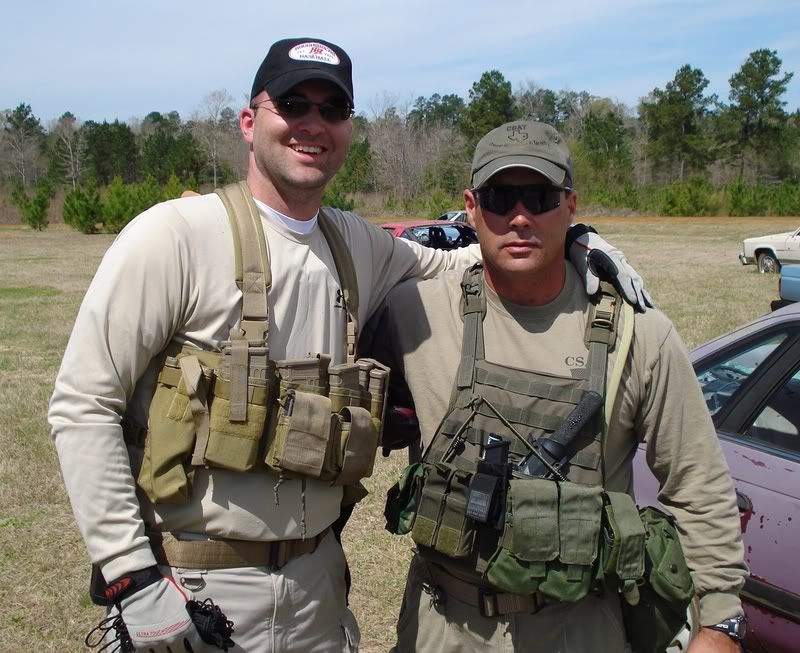
Instructor Paul Howe pictured with the author.
Justice Breyer – Ideology vs Machete
Posted by Gary in Law, News, Opinion, Threat Watch on 17/Feb/2012 11:16
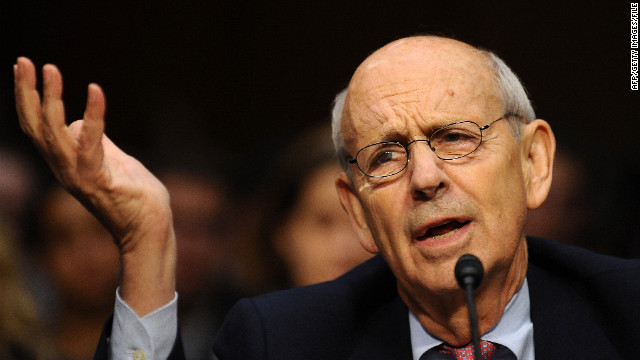
Justice Stephen Breyer
In a bit of timely and ironic justice, Justice Stephen Breyer, who wrote in his dissenting opinion in McDonald vs Chicago, “… the Framers did not write the Second Amendment in order to protect a private right of armed self defense”, was robbed by a machete-wielding miscreant a few days ago on the island of Nevis. Despite the island paradise’s complete ban on handguns (much like the Justice would have preferred to be the case in Chicago) there still seems to be the odd armed robber, threatening peoples lives and inconveniencing vacationers. Normally the Justice doesn’t need to bring along his own firearms for protection like the rest of us, that is the job of the U.S. Marshals Service. I wonder where they were during the attack? You see this is the problem, there is never a taxpayer-funded, well trained, armed bodyguard around when you need one, even if you are a Justice of the Supreme Court of the United States of America.
More from CNN
Bolt Gun vs. Gas Gun for LE Operations By Paul Howe
Bolt Gun vs. Gas Gun for LE Operations
By Paul Howe
From CSAT
I’ve have started to teach Urban Marksman (Sniper) courses to Law Enforcement personnel and wanted to address the issue of whether to use a Bolt Action Rifle (Bolt Gun) or Semi-Automatic Rifle (Gas Gun) for law enforcement applications. I think both have their pros and cons, but I want to go over them with you. Here are a few topics I wish to discuss:
- Safety
- Accuracy
- Reliability
- Training Time
- Cost
- Courses of Fire
- Conclusions
While assigned to Special Operations in the 90’s, I served two years as a sniper. In the “old days,†I used a bolt action platform which fired a .300 Winchester Magnum cartridge and a gas operated platform, the .308 M1A magazine fed rifle. Since that time, a variety of both bolt and gas guns have hit the markets, from custom makers to major manufacturers. Read the rest of this entry »
Afghanistan: Moving Toward a Distant Endgame
Posted by Brian in Opinion, Threat Watch, Warriors on 8/Feb/2012 13:47
From STRATFOR:
By George Friedman
U.S. Defense Secretary Leon Panetta suggested last week that the United States could wrap up combat operations in Afghanistan by the end of 2013, well before the longstanding 2014 deadline when full control is to be ceded to Kabul. Troops would remain in Afghanistan until 2014, as agreed upon at the 2010 Lisbon Summit, and would be engaged in two roles until at least 2014 and perhaps even later. One role would be continuing the training of Afghan security forces. The other would involve special operations troops carrying out capture or kill operations against high-value targets.
Along with this announcement, the White House gave The New York Times some details on negotiations that have been under way with the Taliban. According to the Times, Mullah Mohammad Omar, the senior-most leader of the Afghan Taliban, last summer made overtures to the White House offering negotiations. An intermediary claiming to speak for Mullah Omar delivered the proposal, an unsigned document purportedly from Mullah Omar that could not be established as authentic. The letter demanded the release of some Taliban prisoners before any talks. In spite of the ambiguities, which included a recent public denial by the Taliban that the offer came from Mullah Omar, U.S. officials, obviously acting on other intelligence, regarded the proposal as both authentic and representative of the views of the Taliban leadership and, in all likelihood, those of Mullah Omar, too. Read the rest of this entry »
STRATFOR: The Arab Spring Revisited
Posted by Brian in Opinion, Threat Watch on 6/Feb/2012 16:28
Video from Stratfor: